
WELCOME BONUS 300%
UP TO €2000 + 100
FREE SPINS
UP TO €2000 + 100
FREE SPINS
Home → Games
Casino games at lucky31
Video Poker: check payout table before betting
The Jacks or Better 8/5 variant offers a Return to Player of 97.29 percent, which establishes a house edge of 2.71 percent for the player. This figure drops significantly from the standard 9/6 paytable that yields 98.45 percent RTP, demonstrating how small changes in payout structures impact long-term value. The Royal Flush pays 800 coins while the Straight Flush returns 50 coins, setting the baseline for all lower tier hands. Reducing the Full House payout from nine to eight units costs exactly 2.25 percentage points of RTP compared to the more generous version.
A comparison with the 9/5 variant reveals an RTP of 98.45 percent, showing that lowering the Flush payment from five to four units creates a steeper decline in expected returns. The Straight continues to pay four coins and Three of a Kind three coins, maintaining the core structure despite the reduced top-tier rewards. Players analyzing these tables must note that the 8/6 configuration sits at 98.39 percent, offering a marginal improvement over the 8/5 model. Such distinctions highlight why verifying the specific machine parameters is essential before placing any wagers.
The 7/5 paytable further deteriorates the player's position with an RTP of 96.15 percent and a house edge of 3.85 percent. Meanwhile, the 6/5 version offers only 94.99 percent RTP, representing the worst-case scenario among common Jacks or Better configurations. The Two Pair still pays two coins and the lowest hand, Jacks or Better, remains at one coin, but the reduced high-hand payouts dominate the calculation. Understanding these numerical differences allows players to identify machines that preserve their bankroll more effectively over extended sessions.
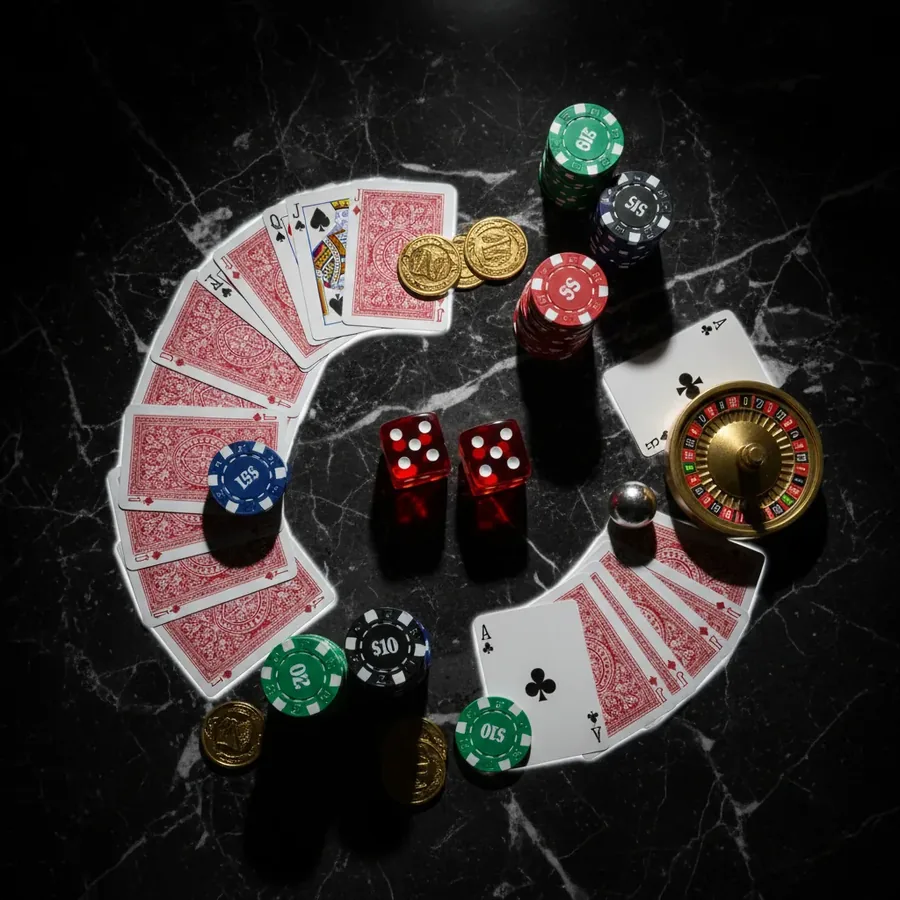
What Doesn't Count Towards Bonus Wagering on Table Games?
Side bets such as the Baccarat Player Pair offer an RTP of 89.64 percent, which indicates a house edge of 10.36 percent for the participant. These additional wagers are excluded from the main game flow and often carry separate contribution rules that differ significantly from the primary bet. The Pair pays 11 for 1, meaning the net return is ten times the stake, yet the mathematical expectation remains heavily skewed against the player. Recognizing this exclusion helps users avoid wasting bonus funds on high-edge supplementary options.
Insurance represents another common exclusion where the house edge reaches 7.47 percent across six to eight decks of cards. This side bet activates when the dealer shows an Ace, allowing players to wager up to fifty percent of their original stake. The payout stands at 2 to 1, but basic strategy dictates always rejecting this option unless counting cards yields a true count of plus three or higher. Including such bets in wagering calculations would distort the actual progress toward clearing the bonus requirements.
Craps Come bets share identical mathematics with the Pass Line, featuring an RTP of 98.59 percent and a house edge of 1.41 percent. Although these bets function similarly to the initial Pass Line wager, they operate as independent propositions within the same roll cycle. The Standard Deviation measures 1.00, indicating moderate volatility compared to other table games. Users should verify whether these specific proposition types contribute fully to the turnover requirements or if they fall under restricted categories.
Table Games Often Count Only 10 Percent
Blackjack with six decks and a 6:5 payout structure delivers an RTP of 98.15 percent, resulting in a house edge of 1.85 percent. Replacing the traditional 3:2 blackjack payout with 6:5 adds exactly 1.39 percentage points to the casino's advantage, making it significantly less favorable. A ten-dollar bet yields twelve euros instead of fifteen, directly impacting the potential return on investment for every winning hand encountered during play.
Baccarat Banker bets utilizing eight decks with a five percent commission generate an RTP of 98.94 percent and a minimal house edge of 1.06 percent. The effective payout becomes 0.95 to one after deducting the commission, which compensates for the banker's statistical advantage in drawing the third card. This configuration remains the most profitable option in baccarat, offering superior odds compared to the Tie bet which carries a much higher risk profile.
Roulette French variants employing La Partage rules provide an RTP of 98.65 percent for even money bets like Red or Black. When the ball lands on zero, half the stake is returned, reducing the house edge from 2.70 percent down to 1.35 percent. This rule applies exclusively to outside bets, leaving inner wagers like the Straight at 35 to 1 unaffected by the partial refund mechanism.
6 Decks vs. 8 Decks in House Edge
Single deck Blackjack with classic rules and a 3:2 payout achieves an impressive RTP of 99.85 percent, yielding a house edge of just 0.15 percent. Utilizing fewer decks reduces the probability of receiving ten-value cards, thereby improving the player's strategic options and overall expected return. This configuration typically offers approximately negative 0.48 percentage points relative to eight-deck versions, provided the 3:2 payout remains intact throughout the session.
Six-deck Blackjack games frequently adopt the 6:5 payout structure, which inflates the house edge to 1.85 percent despite using fewer decks than eight-deck shoes. The reduction in deck count alone cannot offset the detrimental impact of the altered payout ratio on the final mathematical expectation. Players comparing these two formats must recognize that the payout term outweighs the deck count variable in determining long-term profitability.
Eight-deck Baccarat Player bets maintain an RTP of 98.76 percent with a house edge of 1.24 percent, excluding any commissions or fees. The absence of a commission makes the net return one to one, though the edge remains slightly higher than the Banker bet due to the lack of fee compensation. Standard deviation measures 0.95, indicating consistent performance across thousands of rounds without extreme variance in outcomes.
Six-deck Blackjack Insurance carries an RTP of 92.53 percent, establishing a steep house edge of 7.47 percent for participants who choose to hedge. This side bet becomes available only when the dealer exposes an Ace, requiring a separate wager up to fifty percent of the main stake. The payout stands at 2 to 1, but accepting this option generally erodes the overall bankroll efficiency unless advanced card counting techniques are employed.
Straight, Split, and Corner in direct comparison
The Straight bet in European Roulette covers a single number and pays 35 to 1, reflecting the probability of hitting one out of thirty-seven sectors. This wager carries the highest payout multiplier but also the lowest chance of success, maintaining the standard 2.70 percent house edge across all roulette bets. The RTP remains fixed at 97.30 percent regardless of the sector chosen, ensuring uniform mathematical expectations for all straight-up placements.
The Split bet covers two adjacent numbers and returns 17 to 1, offering a middle ground between the high-risk Straight and low-risk Outside bets. By covering twice the numbers, the probability of winning doubles while the payout halves, preserving the underlying house edge of 2.70 percent. This configuration appeals to players seeking slightly better odds without sacrificing significant return potential on each successful spin outcome.
The Corner bet spans four numbers and pays 8 to 1, providing a balanced risk-reward profile for strategic roulette players. Covering quadruple the area increases the hit frequency compared to the Split, yet the reduced payout keeps the house edge constant at 2.70 percent. All inner bets in French Roulette lack La Partage protection, meaning the full 2.70 percent edge applies uniformly to these specific placement wagers.
Game categories at a glance
| Category | Examples | Stakes From | Highlight |
|---|---|---|---|
| Slots | Diamond Mine Megaways, Book of Dead, San Quentin xWays | 0,10 EUR | thousands of titles |
| Table games | Roulette, Blackjack, Baccarat | 0,50 EUR | classic rules |
| Live casino | Ultimate Texas Hold'em, Mega Fire Blaze Roulette Live | 0,20 EUR | real dealers |
| Jackpot games | Mega Moolah, Divine Fortune, Age of the Gods | 0,20 EUR | progressive pools |
| Instant games | Aviator, Plinko, Mines | 0,10 EUR | fast rounds |
| Video poker | Jacks or Better, Deuces Wild | 0,25 EUR | strategy based |
Straight 35:1 Against the Chance of 1 in 37
Roulette Europäisch features a straight bet paying 35:1 against a probability of one in 37, resulting in a house edge of 2.70% and an RTP of 97.30%. This constant advantage applies to all wagers on the single-zero wheel, including split bets at 17:1 or street bets at 11:1. Consequently, players face a mathematical disadvantage regardless of their chosen betting strategy or stake size on this specific table variant.
The payout structure remains identical across European and French roulette inner bets, where La Partage rules do not apply to corners or splits. A corner bet pays 8:1 while a six line pays 5:1, maintaining the standard 2.70% house edge for these positions. Therefore, the expected loss per euro wagered stays fixed at approximately 0.027 euros for every spin made on these inside sections.
French roulette offers better odds only on even-money outside bets like red/black, which benefit from La Partage to reduce the house edge to 1.35%. Inner bets such as straights and splits retain the higher 2.70% edge found in European versions, creating a mixed risk profile. Players must distinguish between bet types to understand that protection exists solely for odd/even or high/low wagers on the zero-spin.
Splitting in Blackjack: one hand becomes two
Blackjack Surrender allows players to forfeit half their bet after the dealer checks for blackjack, improving the overall game RTP by approximately 0.08 percentage points. This rule modification provides a slight safety net compared to standard games without surrender options, though early surrender is far more valuable but extremely rare. The mechanism returns fifty percent of the original stake when the player decides to fold rather than play out the difficult hand.
Standard deviation in eight-deck games typically measures around 0.95 for baccarat player bets, whereas blackjack strategies rely heavily on basic probability calculations. Splitting pairs effectively doubles the initial wager, exposing the bankroll to twice the normal variance during the subsequent hands played by the dealer. Understanding this risk helps players manage their bankroll more effectively when facing volatile streaks in multi-hand scenarios.
Insurance represents a separate side bet available when the dealer shows an ace, offering 2:1 payouts with a significant house edge of 7.47% for six to eight decks. Basic strategy universally advises rejecting this wager unless counting cards reveals a true count of plus three or higher. Accepting insurance without card counting increases the casino's advantage substantially, making it a statistically poor choice for most casual participants.
Before Double Down: read the open dealer card
Baccarat Banker bets carry the lowest house edge at 1.06% with an RTP of 98.94%, despite a five percent commission on wins reducing the effective payout to 0.95:1. This statistical advantage compensates for the banker drawing the third card under specific rules, making it the strongest option among main baccarat wagers. Players should prioritize this bet type to minimize long-term losses while navigating the inherent variance of the game outcomes.
Blackjack payouts vary significantly based on table rules, with six-to-five payments increasing the house edge to 1.85% compared to the traditional three-to-two ratio. A ten-euro bet yields twelve euros instead of fifteen under the inferior rule, directly impacting the return rate down to 98.15% RTP. Recognizing these payment structures allows gamblers to identify tables that offer fairer terms and avoid those designed to extract more value from each wager.
Video Poker Jacks or Better 8/5 machines provide an RTP of 97.29%, dropping sharply from the optimal 9/6 version due to reduced full house and flush payments. The Royal Flush still awards 800 coins, but lower-tier hands pay less generously, increasing the house edge to 2.71% over time. Selecting machines with higher pay tables is crucial for maintaining favorable returns in video poker environments where skill influences final results.
Push in Blackjack: the bet returns
Sic Bo Special Bets exhibit wide volatility ranges, with specific triple payouts reaching 180:1 but carrying a massive house edge of 16.20% and low RTP of 81.48%. Single number bets offer better odds at 7.87% edge, paying 1:1 or 2:1 depending on dice matches, yet still lag behind table game standards. These high-variance wagers demand large bankrolls to sustain play through inevitable losing streaks caused by the substantial mathematical disadvantage inherent in the game design.
Craps Pass Line bets maintain a steady house edge of 1.41% with an RTP of 98.59%, matching the Come bet in mathematical expectation per roll. The standard deviation of 1.00 indicates moderate volatility, allowing players to experience balanced win-loss cycles over extended sessions without extreme fluctuations. Consistent application of basic craps strategy ensures that the theoretical advantage remains stable and predictable for disciplined participants throughout the gaming session.
Baccarat Tie bets paying nine-to-one improve upon the eight-to-one version, lowering the house edge from 14.36% to 4.84% with an RTP of 95.16%. Despite this improvement, the tie remains significantly weaker than banker or player bets, requiring frequent losses to offset occasional large wins. High standard deviation of 2.64 confirms the risky nature of this side option, discouraging reliance on it for consistent profitability or bankroll preservation.
Dozen 2:1 Hits 12 of 37 Numbers
Roulette Dozen bets pay 2:1 and cover twelve numbers out of thirty-seven sectors, aligning with column bets and even-money options like red/black. In European roulette, these wagers suffer the standard 2.70% house edge because La Partage rules do not extend to dozen positions on plain wheels. Players seeking reduced risk should target French variants where outside bets benefit from en prison rules to halve losses on zero spins.
Column bets function identically to dozens, offering 2:1 payouts for hitting any of the twelve numbers in a vertical grouping across the layout. Both dozen and column bets share the same probability and house edge in standard European formats, providing consistent expectations for flat-betting strategies. Understanding these equivalences helps gamblers diversify their chip placement while maintaining uniform risk exposure across different sections of the roulette table matrix.
Straight bets on single numbers pay 35:1 but hit only once every thirty-seven attempts, creating a steep house edge of 2.70% across all inside positions. Corners pay 8:1 and streets pay 11:1, each reflecting the inverse relationship between payout size and winning probability on the single-zero wheel. Strategic allocation requires balancing high-payout low-probability shots with safer outside bets to manage overall variance and preserve capital during extended play sessions.
When is Splitting Aces and Eights Sensible?
Blackjack with a single deck and classic rules including a 3:2 payout offers an RTP of 99.85% and a house edge of only 0.15%. This optimal mathematical advantage relies on standard splitting strategies, where players divide pairs to maximize expected value against the dealer's upcard. Deviating from these basic principles significantly erodes the player's long-term return potential in this specific game configuration.
Switching to a six-deck shoe with a 6:5 blackjack payout reduces the RTP to 98.15% while increasing the house edge to 1.85%. This rule change adds exactly 1.39 percentage points to the casino's advantage over the original 3:2 structure. Players must adjust their betting size or avoid the table entirely because the financial loss rate doubles under these less favorable conditions.
Surrender rules modify the baseline mathematics by allowing a late surrender after the dealer checks for blackjack. This option improves the RTP by approximately 0.08 percentage points compared to a no-surrender variant. However, early surrender which yields up to -0.6% edge is extremely rare, making late surrender the primary strategic tool available to mitigate losses.
Why the Double Zero Almost Doubles the House Edge
European Roulette features a single zero on its thirty-seven sector wheel, resulting in an RTP of 97.30% and a house edge of 2.70%. The constant edge applies uniformly to all bet types, from simple even-money wagers like Red/Black paying 1:1 to straight bets paying 35:1. This structural consistency ensures predictable long-term returns regardless of the specific wager placed on the layout.
French Roulette introduces the La Partage rule for even-money outside bets, maintaining the 2.70% base edge but reducing it to 1.35% when the ball lands on zero. In this scenario, half of the stake on Red/Black or Odd/Even is returned to the player instead of being lost entirely. En Prison provides an equivalent mathematical benefit by freezing the bet for the next round.
Inner bets in French Roulette do not qualify for La Partage, keeping the house edge at the standard 2.70% for spots like Straights paying 35:1 or Corners paying 8:1. This distinction means players face different risk profiles depending on whether they place chips on the outer perimeter or the central number grid. Understanding this split ensures accurate expectation calculations for mixed betting strategies.
Submit documents no older than three months
The platform requires valid identification documents that are no older than three months to process verification requests efficiently. This strict timeframe ensures the KYC data remains current and matches the user's present legal status without delay. Providing outdated paperwork often results in rejected applications, forcing applicants to resubmit fresh evidence to proceed with account activation.
Financial security protocols mandate recent proof of address alongside government-issued ID to prevent fraudulent account creation and money laundering. The three-month limit aligns with standard regulatory compliance requirements for online gambling operators across multiple jurisdictions. Users must upload clear scans of utility bills or bank statements dated within this specific window to satisfy audit trails.
Failure to provide timely documentation halts withdrawal processing until the aged files are replaced with compliant alternatives. This administrative step protects both the operator and the player by confirming identity before releasing funds. Maintaining updated records prevents unnecessary pauses in account activity and ensures continuous access to banking services.
Straight 35:1 Instead of 36:1: Where House Edge Originates
A Straight bet in European Roulette pays 35:1 despite the wheel containing thirty-seven numbers, creating a two percent discrepancy in true odds versus payout. This structural difference generates the 2.70% house edge that persists across all bet types on the table layout. The casino retains this margin regardless of whether the player chooses inside or outside wager categories.
Baccarat Player bets pay 1:1 with no commission, offering an RTP of 98.76% and a house edge of 1.24% in eight-deck games. This fee-free structure contrasts sharply with Banker bets which charge a five percent commission on wins. The Player side provides consistent returns without complex deductions, though the edge remains higher than the Banker option.
Banker bets in Baccarat utilize a 0.95:1 effective payout due to the five percent commission applied to winning hands. This adjustment compensates for the statistical advantage the Banker holds during the third-card drawing phase. The resulting RTP of 98.94% makes it the most mathematically favorable main wager in the game.
Player pays 1:1 without any commission
The Player position in Baccarat offers a straightforward 1:1 payout with no deduction fees applied to winning hands. This structure yields an RTP of 98.76% and a house edge of 1.24% using eight decks of cards. Players receive their full winnings immediately without the administrative complexity of tracking commissions or calculating net profits.
Side bets like Player Pair offer significantly lower returns with an RTP of 89.64% and a house edge of 10.36%. These wagers pay 11:1 if the first two cards form a pair, but the probability favors the house heavily. Such side bets carry edges orders of magnitude higher than the main game, reducing overall session longevity.
Video Poker Jacks or Better 8/5 machines provide an RTP of 97.29% with a house edge of 2.71%. Full Houses pay 8 units and Flushes pay 5, which is two units less than the optimal 9/6 schedule. This reduction costs 2.25 percentage points in RTP, demonstrating how minor paytable changes impact long-term profitability.
Contact
Live - online chat
Banking









Providers












Lucky31 Casino 2026